- Traditional Kerala Food
- Trekking in Vagamon
- Cochin Carnival
- Best Time to Visit Vagamon
- Munnar to Thekkady
- Fort Kochi Chinese Fishing Nets
- Vagamon Paragliding
- Things to Do in Vagamon
- Tourist Attractions in Wayanad
- Places to Visit in Vagamon
- Waterfalls in Thekkady
- Periyar Elephant Safari
- Trekking in Wayanad
- Muneeswaran Kunnu View Point
- Tourist Places in Alappuzha
- En Ooru Wayanad
- Lakkidi View Point
- Pookode Lake Wayanad
- Gavi Eco Tourism
- Broadway Market Kochi
- Beaches in Kochi
- Mangalavanam Bird Sanctuary
- Beaches in Kovalam, Kerala
- Coimbatore to Wayanad
- Museums in Kochi
- 2 Day Trip to Wayanad
- Munnar from Kochi
- Carmelagiri Elephant Park
- The Best Time to Visit Thekkady's Wild Wonders
- Explore Azhimala Shiva Temple
- Madurai to Thekkady
- Explore the Best Places to Visit in Kochi
- The Perfect One-Day Trip near Trivandrum
- Places to Visit in Kerala
- Tea Factory in Wayanad
- Best Time to Visit Wayanad
- Places to Visit Around Kovalam
- Your Ultimate Wayanad Retreat
- Trip from Coimbatore to Thekkady
- Bangalore to Wayanad Trip
- Periyar Wildlife Sanctuary
- 2 Day Trip to Alleppey
- Mattancherry Palace
- Trip to Kovalam
- Hill Stations in Kerala
- Best Things to Do in Kovalam
- Best Tourist Places in Kochi
- 5 Best Ways to spend your time during this pandemic
- Best places to visit within Kerala this summer
- The Best Kerala Holiday Packages
- Couples Guide to Kerala
- Tourist Attractions in Kochi
Traditional Kerala food brings together rice, coconut, spices, and the familiar banana leaf on which many meals are served. Rice forms the foundation of everyday cooking, appearing as steamed grains, flour-based dishes, and fermented batters. Coconut adds flavour and texture as grated flesh, milk, or oil, while spices from the Western Ghats give each preparation its distinctive character.
However, Kerala's food culture is far from uniform. The flavours and cooking traditions change as you travel across the state. Wayanad lies in the historic Malabar region of northern Kerala. Its cuisine has distinct influences that set it apart from the backwaters and southern districts. From the distinctive rice used in biryani to regional breads and meat dishes shaped by Arab culinary influences, there is plenty to discover. Breakfast is a good place to begin, offering a first taste of what makes Malabar cooking special.
Traditional Kerala Food at Breakfast
Breakfast is where traditional Kerala food shows its reliance on rice. Across the state, 3 dishes carry the morning, and each is steamed or fermented rather than fried. None of them is sharp enough to trouble a visitor's palate that early. What changes is the curry beside them.
Appam with Stew: A fermented rice pancake with a lacy edge, served with a thick coconut gravy of vegetables or chicken
Puttu with Kadala Curry: Rice flour and grated coconut steamed in a cylinder, eaten with spiced black chickpeas
Idiyappam: Steamed rice noodles pressed into soft discs, served with coconut milk, an egg roast, or a vegetable stew
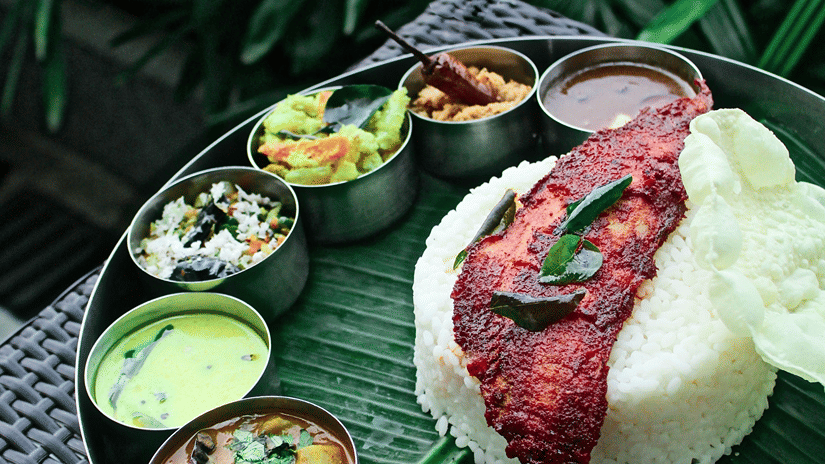
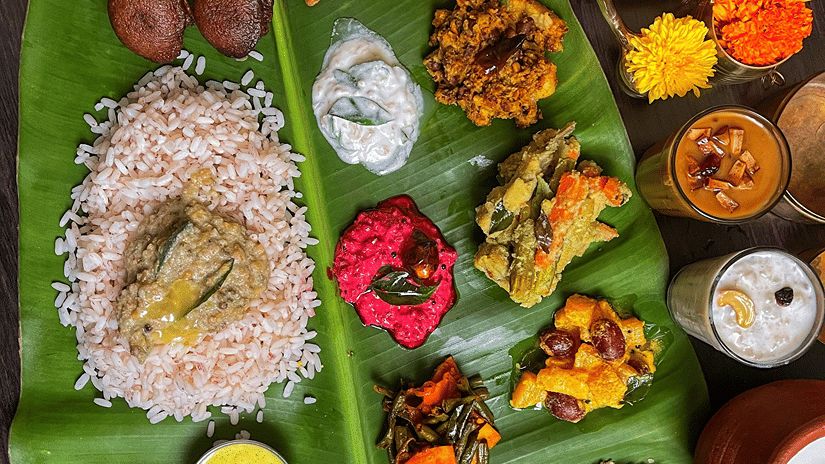
The Kerala Sadya: A Banana Leaf Full of Flavours
A traditional Kerala lunch is more than a spread of dishes. It is a carefully arranged meal where every preparation has its place, and the banana leaf sets the stage. Kerala dishes are served on a plantain leaf, with the tapering end pointing to the left. Rice takes its place in the lower half, while an assortment of curries, savouries, pickles, and sweets fills the space above.
There is a rhythm to eating this meal, too. Parippu, a mild lentil curry finished with ghee, is served first with rice. Sambar follows, bringing a deeper blend of spices and vegetables. Towards the end, rice is paired with rasam, a thin, tangy broth flavoured with tamarind, chilli, and pepper. Seasoned buttermilk rounds off the meal, helping balance the rich flavours. Once you fold the leaf to signal that you are done, the meal may be over, but its variety is worth exploring one dish at a time.
Four Kerala Classics that Bring the Banana Leaf to Life
Among the side dishes, the same 4 names recur on almost every leaf. Each is built on a different base, so the plate never tastes repetitive. Coconut runs through 3 of these dishes, in a different form each time.
Avial: Mixed vegetables bound in coconut paste with green chillies, finished with raw curry leaves and fresh coconut oil
Thoran: Minced string beans, cabbage, radish, or gram, tossed with grated coconut, red chillies, and turmeric
Sambar: A vegetable stew boiled in a gravy of crushed lentils, onions, chillies, coriander, and turmeric, with a pinch of asafoetida
Kerala Fish Curry: Fresh catch in a coconut-based gravy, typically spiced with turmeric, chilli powder, and mustard seeds
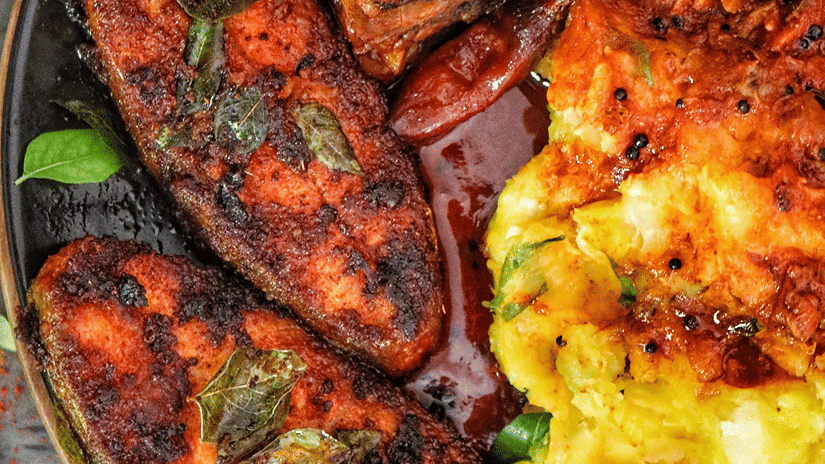
Fish Pollichathu Cooked in a Banana Leaf
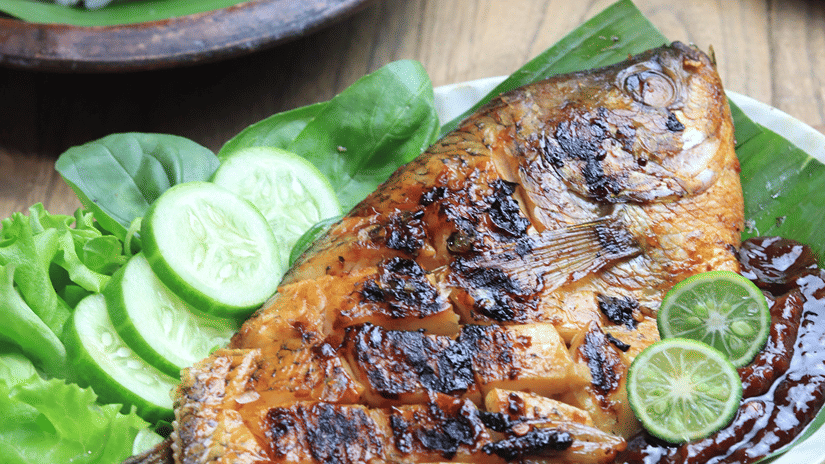
Fish Pollichathu is the dish that makes the banana leaf do real work. The fish is cleaned and scored with gashes along both sides. A paste of ginger, garlic, chopped onion, chilli, turmeric, coriander, and crushed peppercorns is rubbed in. Lime juice and salt go on with it. A sprig of curry leaves goes on top. The fish then moves onto the leaf, which is folded over and sealed at the sides.
Cooking happens on a hot tawa, a flat griddle, with both sides grilled evenly. The leaf chars, the fish steams in its own juice, and the spices stay where they were put. It is usually served with a wedge of lime and a mixed salad. Pearl spot, called karimeen, is a classic choice, though pomfret is often used the same way. Methods vary by household, and they shift further once you head north into Malabar.
Malabar Food: Biryani, Pathiri, and Mussels
Malabar food comes from the stretch between the Western Ghats and the Arabian Sea. It carries Arab, Brahmin, Chirakkal, and Zamorin influences, and Kozhikode and Thalassery are its recognised centres. The menu leans towards meat, mutton more than chicken, which is traced to the early Arab traders. Eggs and dried fruit show up for the same reason.
Malabar Biryani: Rice layered with spiced fish, chicken, beef, or mutton, cooked on 'dum' in a sealed vessel so the aroma stays in
Pathiri: A soft rice pancake, eaten with meat curries, and also served at breakfast
Kallummakkaya Curry: Mussels in a spiced gravy, one of the region's seafood staples
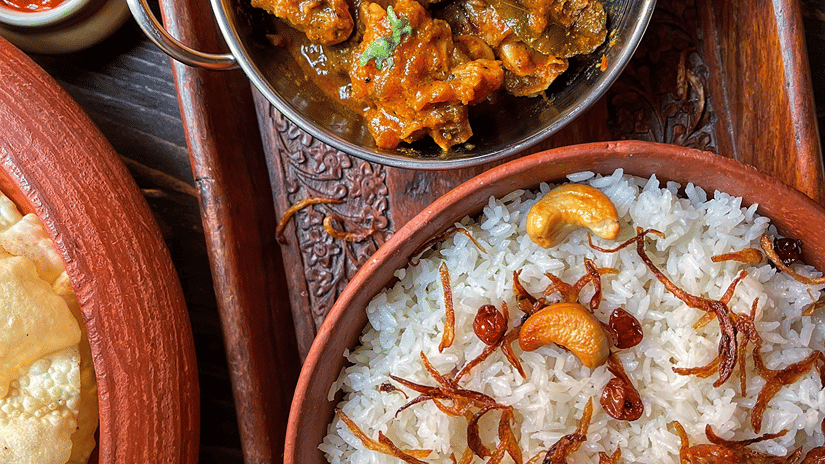
What Wayanad Adds to the Malabar Table
Wayanad is one of the 6 districts that make up Malabar, and it supplies something the coast cannot. Jeerakasala, also called Kaima, is a short-grain aromatic rice grown here. It is the rice that goes into Malabar biryani, and its texture is why the grains stay separate.
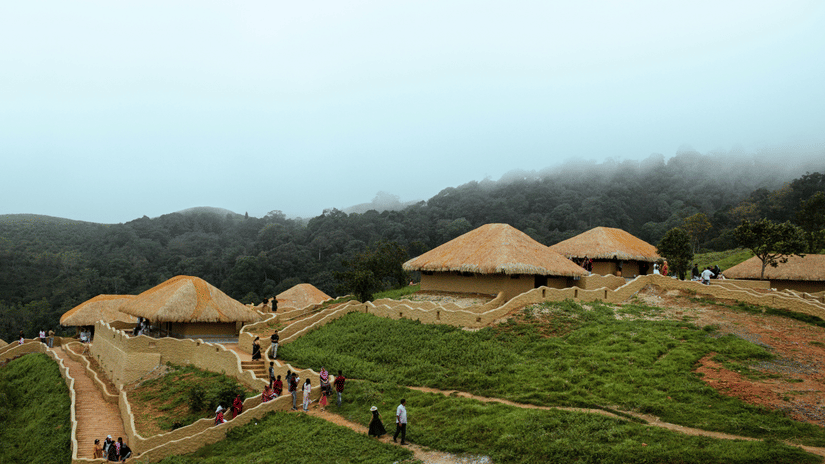
Food here is not only about rice, though. The district's native communities include the Paniyas, Kurumbas, Adiyas, and Kurichiyas. At En Ooru, a heritage village built around indigenous life, market stalls sell tribal foods beside handmade crafts. It is a straightforward way to taste a side of Wayanad that restaurants rarely carry. The same hills grow something else that belongs at the end of a Malabar meal.
Estate Tea to Finish a Kerala Meal
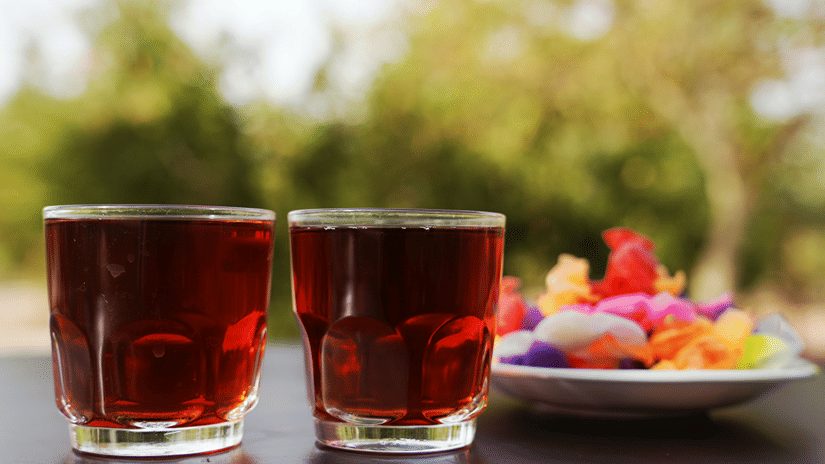
Dessert in Wayanad does not always mean something sweet. A meal might end with a cup of Sulaimani, a refreshing black tea infused with mint or lemon. Its roots trace back to Middle Eastern trade, which also brought culinary influences such as the use of eggs and dried fruits into the region.
Tea has a story of its own here. The British introduced tea cultivation and commercial plantation practices to Wayanad, and many of the estates established during that period continue to operate today. Alongside tea, coffee and spices cover the rolling landscapes between the forests. To experience this side of Wayanad, a plantation visit is worth adding to your plans. And with estates spread across the district, staying nearby makes it easier to enjoy a closer look at how these crops are grown and processed.
Where to Eat Kerala Food in Wayanad
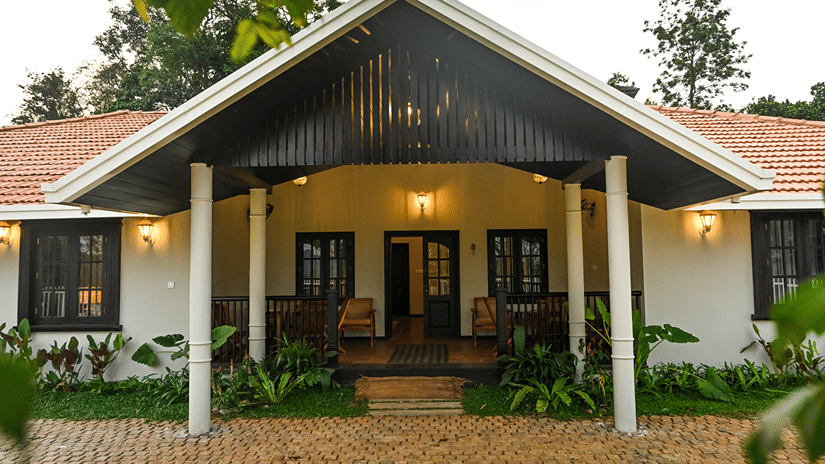
A stay on a working tea estate brings Wayanad's food and plantation culture together. Parisons Plantation Experience by ABAD is tucked away in Thalappuzha, within a sprawling 4,025-acre tea estate in the Malabar region. Here, you can enjoy a varied menu at our multi-cuisine restaurant, featuring South Indian, North Indian, and Chinese preparations. One dish worth looking forward to is Fish Pollichathu, a signature on the menu that brings local flavours to the table.
Between leisurely lunches and relaxed dinners, our rooms offer a peaceful place to unwind amid the tea gardens. Our restaurant serves in-house guests only, keeping the dining experience intimate and unhurried. There is more to discover beyond the menu, too. Join a tea tasting featuring leaves grown on the estate or take a guided tour of the tea factory to see how they make their way from the plantation to your cup.
A Taste of Kerala, One Meal at a Time
Traditional Kerala food rewards anyone willing to eat it in the right order. Breakfast is steamed, lunch is laid out on a leaf, and dinner borrows from whichever coast is nearest. Head north, and the rice, the bread, and the tea at the end all shift with the geography. None of it requires a special occasion. A plantation kitchen in the hills, like ours, puts the whole run of it within reach of a single table.
Frequently Asked Questions (FAQs)
What is traditional Kerala food?
Traditional Kerala food is built on rice, coconut, and spices, usually served on a banana leaf. Rice appears as a grain, a flour, or a batter. Coconut turns up grated, as milk, or as oil.
What is Fish Pollichathu?
Fish Pollichathu is marinated in spices and lime, then wrapped in a banana leaf. The parcel is grilled on a hot griddle until the leaf chars. Pearl spot and pomfret are both used.
What is Malabar food?
Malabar food is the cooking of northern Kerala, between the Western Ghats and the Arabian Sea. It leans towards meat and carries Arab influence. Kozhikode and Thalassery are its recognised centres.
What is a typical Kerala breakfast?
A typical Kerala breakfast is appam with stew, puttu with kadala curry, or idiyappam. All 3 dishes are steamed or fermented rather than fried. The curry beside them changes by household.
What is served in a Kerala sadya?
A sadya lays out Kerala dishes on a plantain leaf, with the tapering side pointing left. Rice goes on the lower half, and parippu and sambar are served first. Folding the leaf ends the meal.
Which rice is used in Malabar biryani?
Malabar biryani uses Jeerakasala, also called Kaima, a short-grain aromatic rice. It is grown in Wayanad, in the hills above the Malabar coast. Its texture keeps the grains separate.
Is tea part of a Malabar meal?
Yes, a Malabar meal often ends with Sulaimani, a black tea flavoured with mint or lemon. The habit came in with Middle Eastern trade.
Where can I eat Kerala food in Wayanad?
Wayanad's working tea estates are a practical base for it. Parisons Plantation Experience by ABAD sits inside a 4,025-acre tea estate in the district. The restaurants serve South Indian, North Indian, and Chinese dishes to in-house guests.