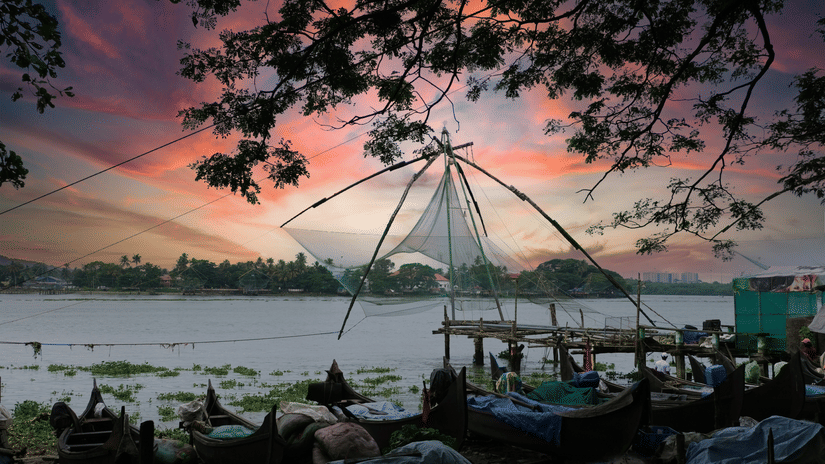
History and Origins of the Chinese Fishing Nets, Kochi
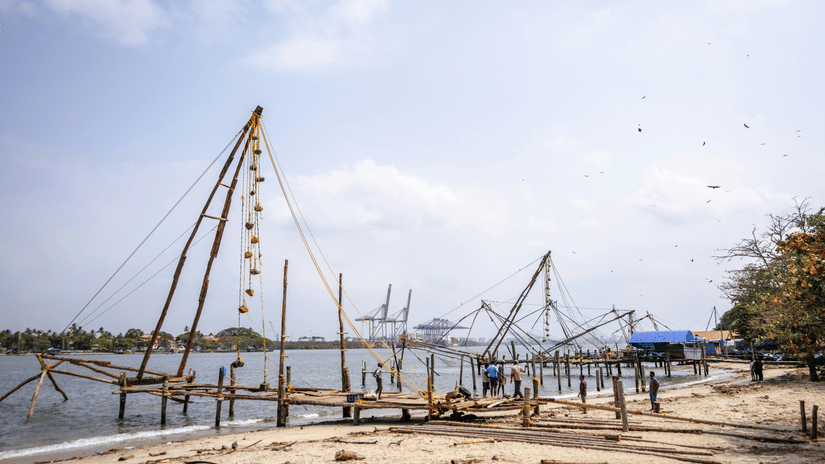
Locals call the structures Cheenavala in Malayalam, a name still used interchangeably with ‘Chinese fishing nets’ across Kochi. The iconic Chinese fishing nets, Kochi, are believed to have been introduced between 1350 and 1450 AD by the Chinese explorer Zheng He, from the court of Kublai Khan. Today, only 8 of the 17 grand fishing nets that once lined this waterfront remain, including 3 of the world’s largest, each requiring 4 fishermen to operate during a shift. Fixed to the shore rather than taken out to sea, they have become an enduring part of Kochi’s waterfront and city identity.
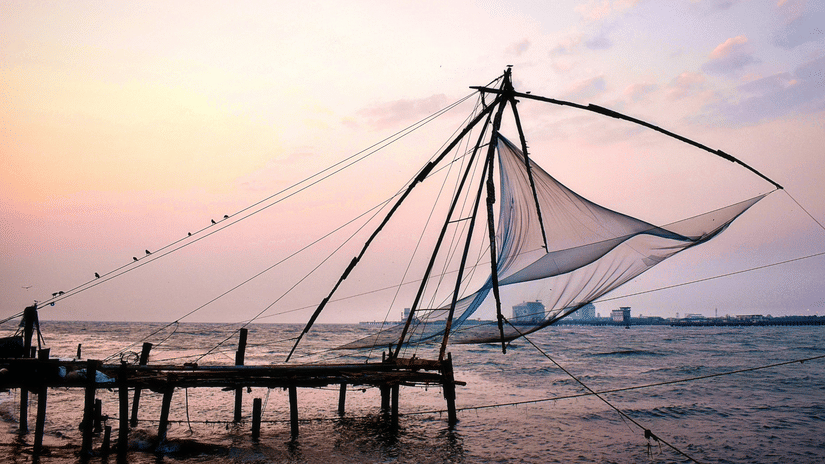
Each installation relies on a simple principle of balance instead of any motorised machinery, ancient as the design itself. A long wooden beam pivots on a frame, with the net slung from a single end and stone counterweights tied to the other. Lowering the net and raising it again takes only rope, patience, and the crew's own sense of timing.
Height and Materials: Each net structure stands approximately 10 m tall, built from teak wood poles and bamboo.
Net Spread: The structure spans approximately 20 m once fully lowered into the water.
Counterweight System: Stone weights, roughly 30 cm across, hang from ropes of varying lengths to balance the frame.
Crew Size: A team of more than 4 fishermen typically works each net through a full day.
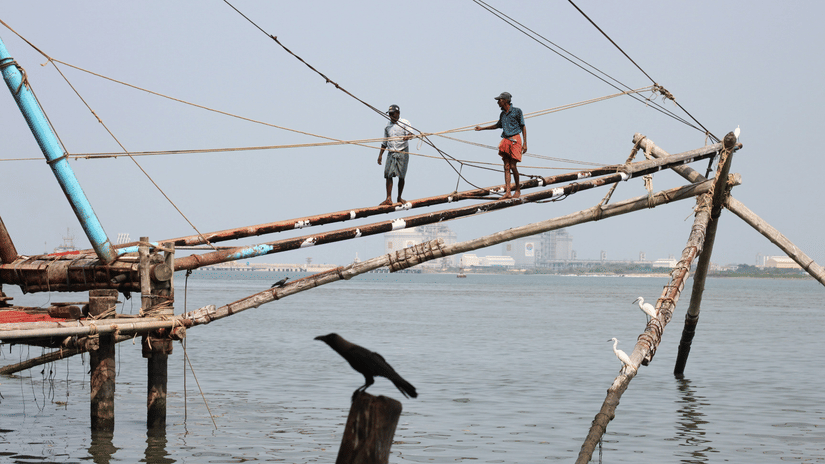
Fishing still happens mostly in the morning and early evening, when the tide and light both work in the crew's favour. Each team lowers its net, waits several minutes, and hauls it back up to check the catch. Some of the Fort Kochi Chinese fishing nets yield only a handful of small fish on a quiet afternoon, while others come up heavier during the right season.
For many families along this stretch of Kochi, operating a net has been passed down through generations as both a trade and a tradition. Much of the catch is sold and cooked to order right at the waterfront, often within minutes of coming out of the water. Watching a crew work the ropes, unhurried and practised, says more about the nets than any signboard ever could.
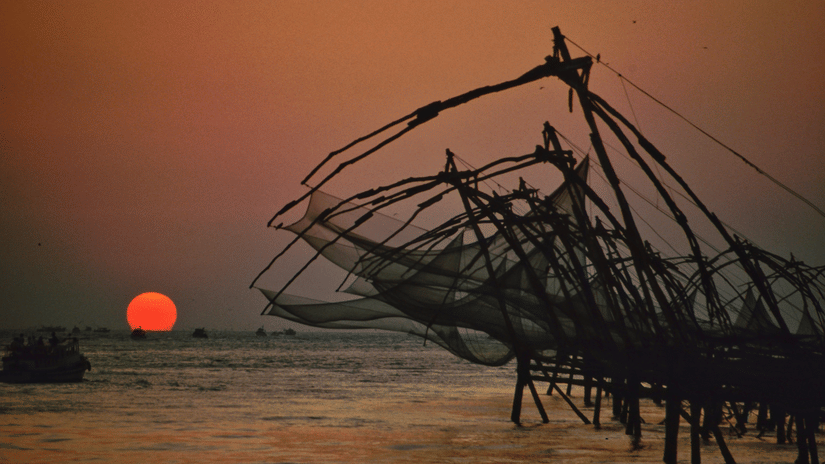
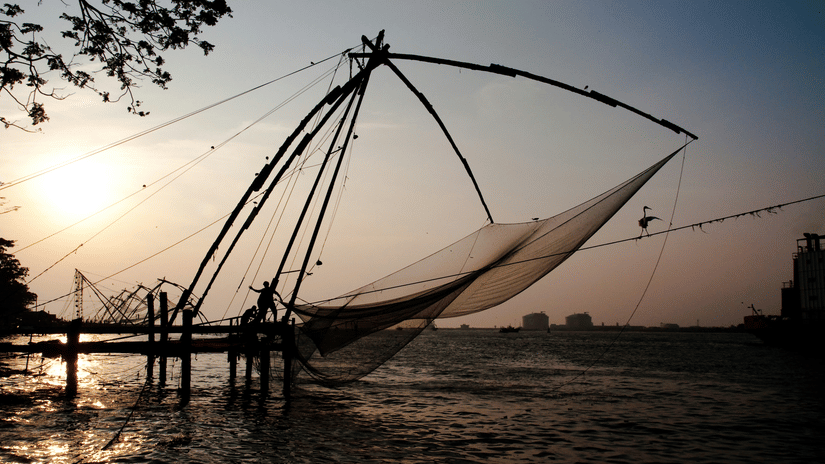
Towards evening, at the Chinese fishing nets, Fort Kochi draws the largest crowds when the nets stand in silhouette against the sky over the water. Vasco da Gama Square, the walkway running along Fort Kochi's shore, offers the clearest view of several nets working in a row. Arriving around 30 minutes ahead of sunset gives enough time to find a spot before the walkway fills up.
Morning works just as well for a quieter visit, before the walkway fills with tour groups later in the day. Fishermen work mostly at sunrise and again in early evening, so a dawn visit still catches the nets in motion. Photographers often prefer this early window for its softer light and noticeably fewer people crossing the frame.
The Waterfront Atmosphere: Stalls, Markets, and Local Life
Beyond the nets themselves, the promenade stays lively through the day, with street performers, local guides, and small stalls selling spices, cold drinks, wood carvings, and antique curios from across Kerala. Bargaining is common, especially for handicrafts and souvenirs, while the evening crowd gathers along the waterfront for sunset. The stretch around the Chinese fishing nets, Kochi, feels less like a single attraction and more like a living part of the city.
Kerala Flavours by the Water
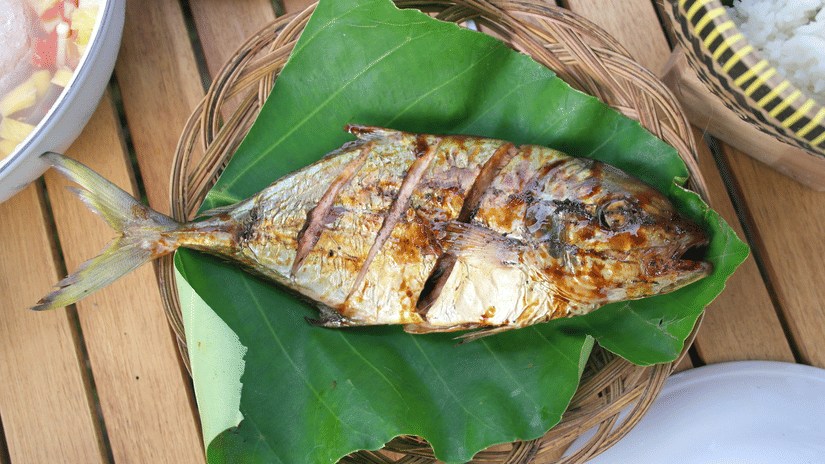
A short stroll from the nets leads to open-air stalls where the day's catch often turns into lunch within the hour. Vendors typically grill or fry the fish simply, seasoned with just chilli, turmeric, and curry leaves. Karimeen, or pearl spot, holds the official title of Kerala's state fish and is worth trying if a stall has it fresh.
Nearby Heritage Highlights
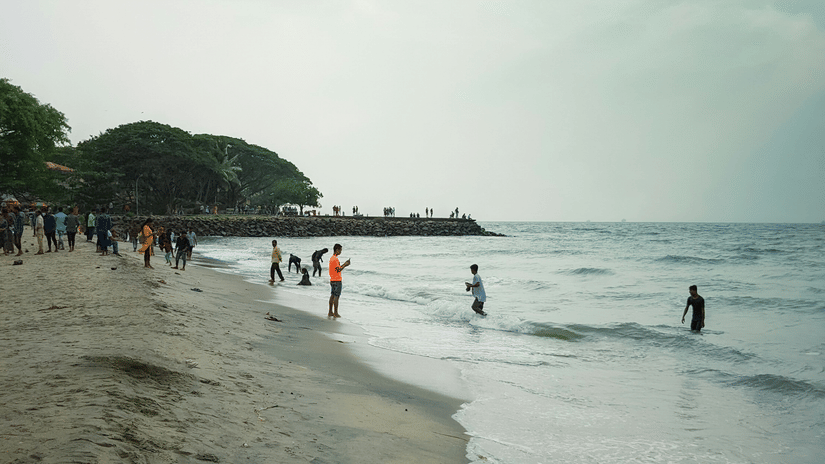
Fort Kochi Beach: A short stretch of shoreline right beside the fishing nets, well suited to a relaxed evening walk
St Francis Church: The original burial place of the Portuguese explorer Vasco da Gama in 1524, before his remains were later moved to Lisbon
Santa Cruz Basilica: Raised to that rank by Pope John Paul II in 1984, this Roman Catholic church is known for its painted ceiling.
Mattancherry Palace: Also called the Dutch Palace, this 16th-century landmark houses mural paintings depicting scenes from the Ramayana.
Footwear: The walkway around the nets is uneven in places, so comfortable, closed shoes work better than sandals.
Photography Etiquette: Many fishermen welcome photographs, though a few appreciate a small tip or a quick nod before you point a camera their way.
Combine with a Heritage Walk: St Francis Church and Santa Cruz Basilica both sit within a short walk of the nets, making it easy to cover several sights during a single outing.
Midday Heat: Afternoons can get uncomfortably warm for walking, so plan the visit for the morning or the hour before sunset instead.
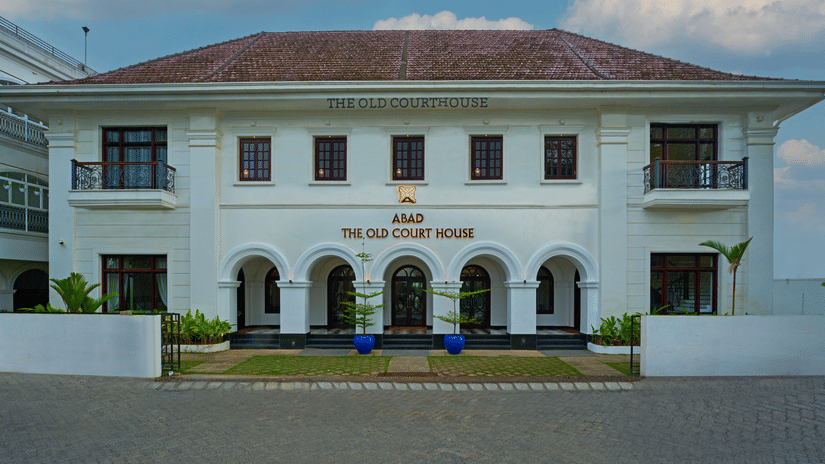
At The Old Court House by Abad, mornings begin within easy reach of the Chinese fishing nets, in a 200-year-old courthouse where traces of its colonial past still linger through the restored interiors. Our rooms open onto quiet corridors shaped by the building’s historic layout, offering a cosy retreat just a short stroll from Fort Kochi's waterfront. For a different view of the coast, head up to our rooftop terrace with a sea view or spend a leisurely afternoon by our sea-view swimming pool.
Step out early and watch the nets rise and fall over the water before returning for a leisurely meal at Rendezvous, our multi-cuisine restaurant. From here, St Francis Church and Mattancherry Palace are close enough to weave into the same day without the interruption of a taxi ride. Come back to the quiet of our old courthouse between outings, with Fort Kochi's waterfront still within an easy walk.