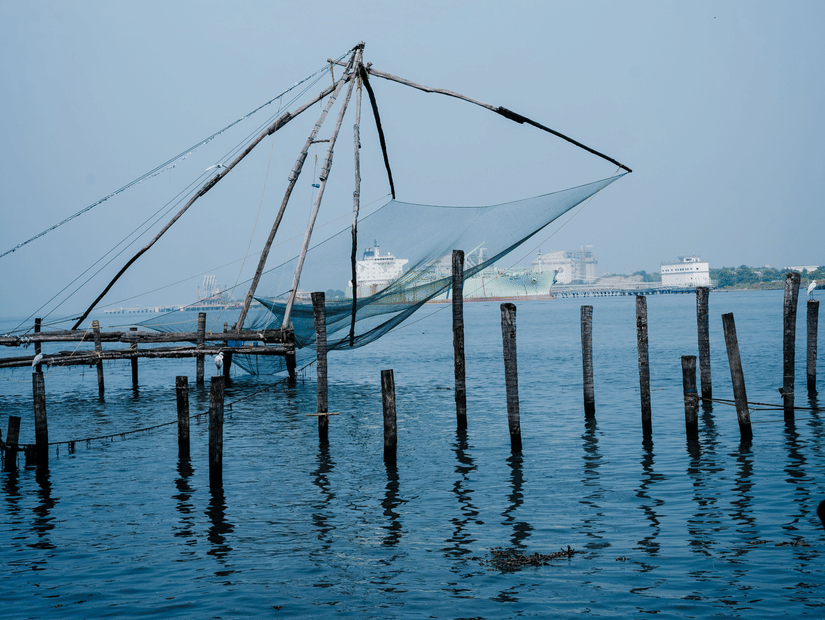
Start where Kochi's relationship with the sea is most visible: beside the Chinese fishing nets at Vasco da Gama Square. Known locally as ‘Cheenavala’, these enormous cantilevered structures have become one of the city's defining sights. Kerala Tourism records that the nets became established along Kochi's shores between 1350 and 1450 AD, traditionally associated with Chinese trading contacts. Watch the fishermen lower the nets towards the water and raise them again using a counterweight system. The movement is slow and almost theatrical, particularly when viewed against the changing light over the Arabian Sea.
It is a fitting introduction to a city whose identity has long been shaped by its position on the coast. From here, Fort Kochi is best explored without rushing. The streets around the waterfront lead naturally towards churches, heritage buildings, cafes, and galleries, allowing the character of the neighbourhood to unfold along the way
It is a fitting introduction to a city whose identity has long been shaped by its position on the coast. From here, Fort Kochi is best explored without rushing. The streets around the waterfront lead naturally towards churches, heritage buildings, cafes, and galleries, allowing the character of the neighbourhood to unfold along the way
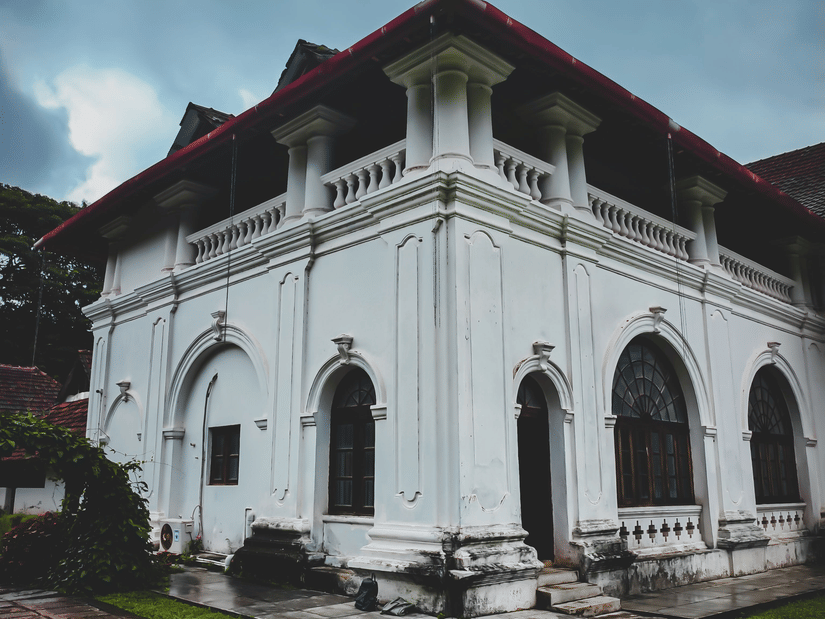
A short journey inland brings you to Mattancherry Palace, popularly called the Dutch Palace. The Portuguese built the palace in 1555 and presented it to the Raja of Cochin. The Dutch later renovated it in 1663, giving the building the name by which it is commonly known today. Its architecture follows Kerala's traditional Nalukettu style, centred around a courtyard and a shrine dedicated to Pazhayannur Bhagavathi. Inside, the murals are the real highlight. Dating broadly to the 17th and 18th centuries, they portray episodes from the Ramayana, Krishna Leela, Shiv Leela, and other Hindu traditions.
The story continues just beyond the palace. Jew Town's narrow streets lead towards the Paradesi Synagogue, built in 1568 and recognised by Kerala Tourism as the oldest synagogue in the Commonwealth. Historic Chinese tiles, chandeliers, Hebrew inscriptions, and other objects preserve the memory of Kochi's Jewish community. This is one of the most rewarding parts of exploring Kochi, Kerala tourist places: 2 landmarks can stand only a short walk apart, yet each reveals a different chapter of the city's past.
The story continues just beyond the palace. Jew Town's narrow streets lead towards the Paradesi Synagogue, built in 1568 and recognised by Kerala Tourism as the oldest synagogue in the Commonwealth. Historic Chinese tiles, chandeliers, Hebrew inscriptions, and other objects preserve the memory of Kochi's Jewish community. This is one of the most rewarding parts of exploring Kochi, Kerala tourist places: 2 landmarks can stand only a short walk apart, yet each reveals a different chapter of the city's past.
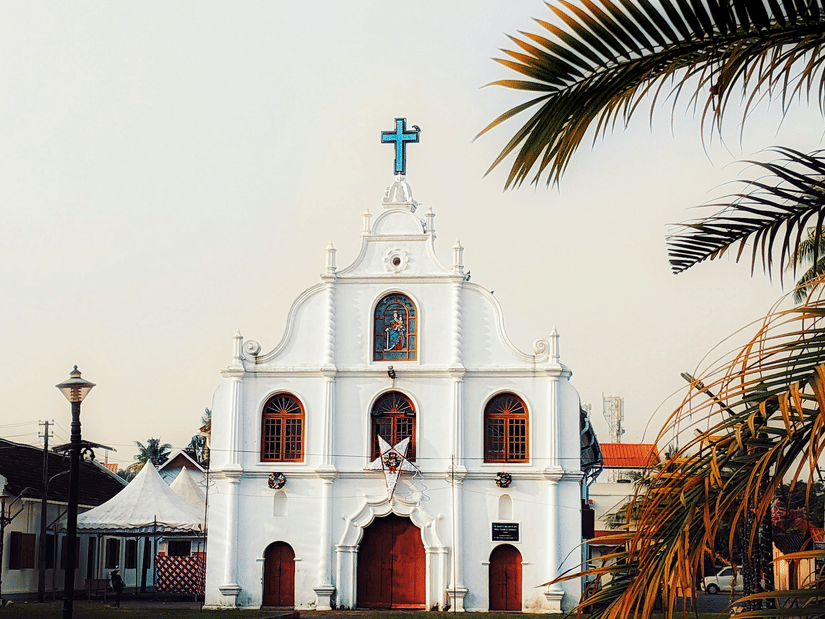
Back in Fort Kochi, St Francis Church offers another glimpse into the city's European history. Built by the Portuguese in 1503, it is widely recognised as one of the oldest European churches in India. The church is also closely associated with Vasco da Gama, who died in Kochi in 1524 and was originally buried here before his remains were transferred to Portugal 14 years later.
His original tombstone remains inside the church, linking this quiet historic space with one of the most recognisable names in the history of maritime exploration. From the church, continue through Fort Kochi's heritage streets, where the past takes on a more contemporary character.
His original tombstone remains inside the church, linking this quiet historic space with one of the most recognisable names in the history of maritime exploration. From the church, continue through Fort Kochi's heritage streets, where the past takes on a more contemporary character.
Former warehouses and colonial-era buildings have found new life as galleries, cafes, and cultural spaces. Pepper House, a former waterfront warehouse, is associated with contemporary art and cultural events, while David Hall occupies a restored Dutch-era bungalow and now houses a contemporary art gallery and cafe.
Kashi Art Gallery adds another destination for those interested in the city's contemporary creative scene. Together, these places reveal another side of Fort Kochi, where historic architecture provides the backdrop for artists, cafes, and creative spaces. Take your time between the landmarks, pause at a cafe, or wander towards the waterfront and watch everyday life unfold around you.
Kashi Art Gallery adds another destination for those interested in the city's contemporary creative scene. Together, these places reveal another side of Fort Kochi, where historic architecture provides the backdrop for artists, cafes, and creative spaces. Take your time between the landmarks, pause at a cafe, or wander towards the waterfront and watch everyday life unfold around you.
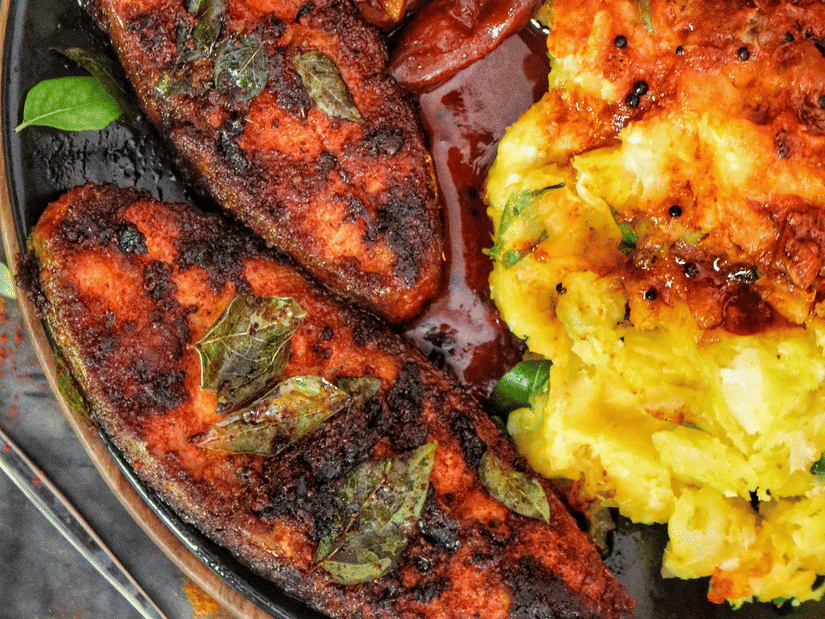
Kochi's food and shopping traditions tell another part of the city's story. As a historic trading port, the city has absorbed influences from the sea, its surrounding communities, and the spices that once drew merchants to Kerala. Seafood naturally takes centre stage. Karimeen, or pearl spot, appears in preparations ranging from pan-fried fish to banana-leaf dishes. Appam, with its soft centre and crisp edges, pairs naturally with coconut-based curries, while traditional toddy shops offer hearty Kerala fare. Around Jew Town, the scent of cardamom, black pepper, cinnamon, cloves, and nutmeg recalls Kerala's long association with the spice trade.
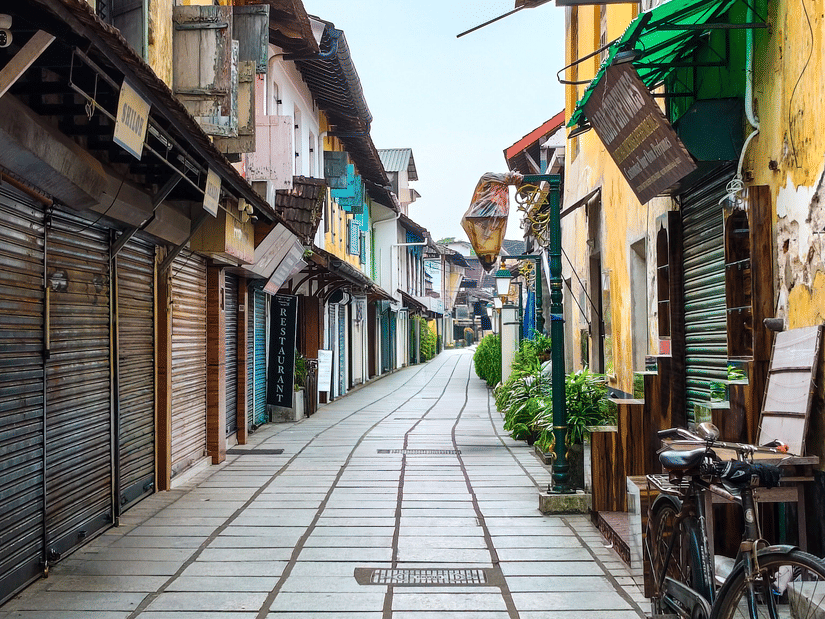
Continue through the narrow lanes between Mattancherry Palace and the Paradesi Synagogue, where shops display spices alongside antique furniture, brassware, and wooden pieces. Browse slowly and pause for something local. In Kochi, food and shopping are not simply stops along an itinerary; they are part of experiencing the city's history, flavours, and everyday character.
Stay For an Evening of Kathakali
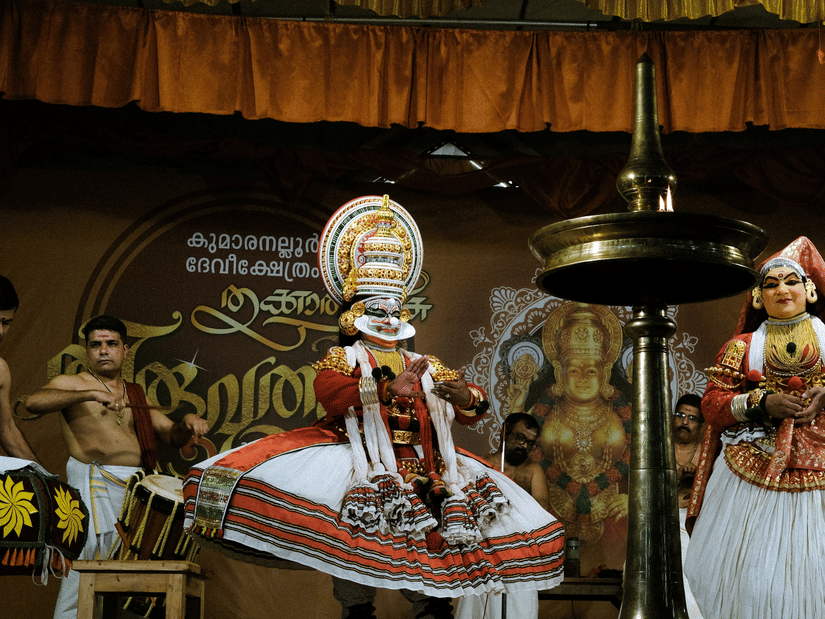
As daylight fades, Kochi's cultural life takes centre stage. Kathakali is one of the city's most distinctive traditional experiences, known for its elaborate costumes, expressive faces, gestures, and storytelling. For first-time viewers, arriving early can make the experience even more rewarding. Some performances include a makeup and costume demonstration, showing how the performers are transformed before the story begins. Selected venues also combine Kathakali with demonstrations of Kalaripayattu, Kerala's traditional martial art.
After a day of walking through Kochi's history, an evening performance offers a different way to understand the culture of Kerala: not through buildings, but through movement, expression, music, and storytelling.
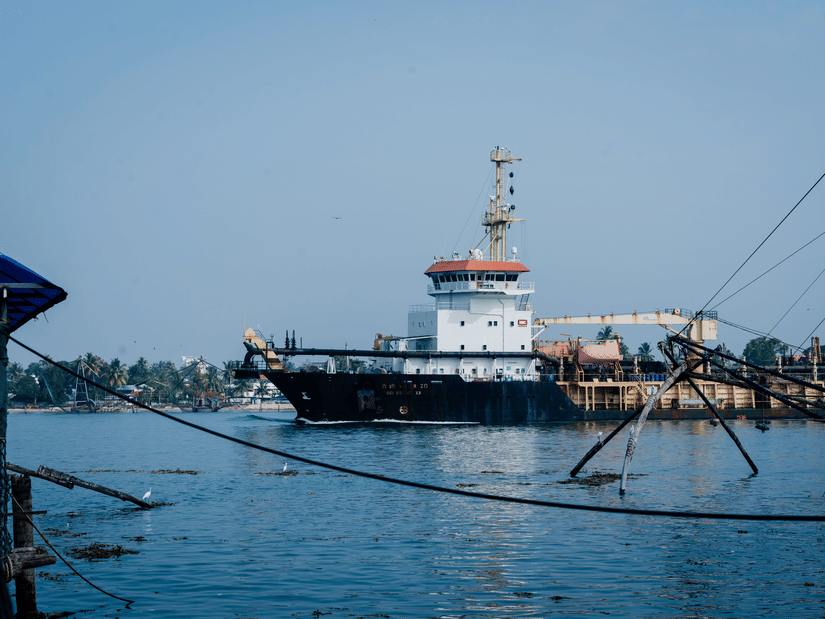
Fort Kochi may hold much of Kochi's historic charm, but the city opens up in different ways once you cross the water. Marine Drive offers a change of pace, with its waterfront promenade stretching for around 3 km and overlooking the backwaters and harbour. The Rainbow Bridge adds a recognisable landmark to the scene, while the open waterfront makes the promenade a pleasant place for an evening stroll. Getting there can be part of the experience, too.
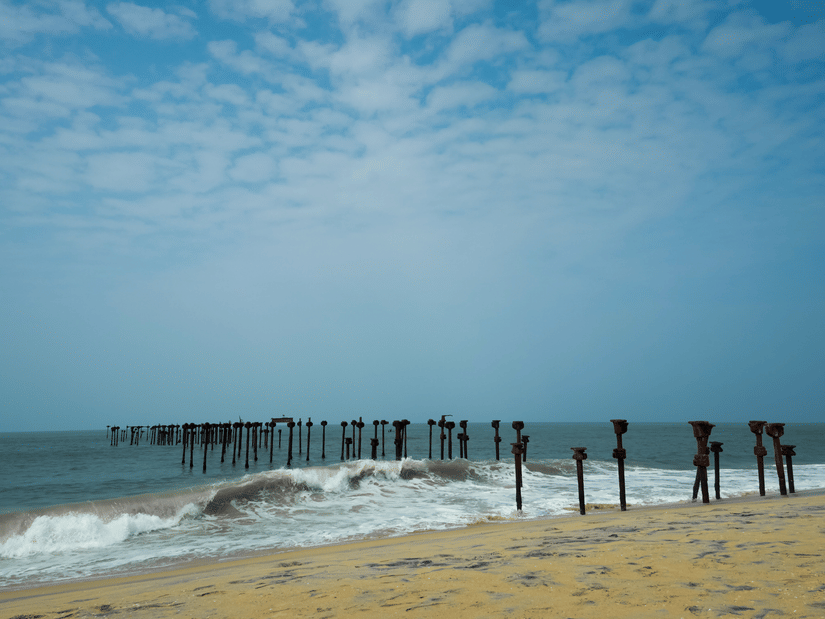
A ferry between Fort Kochi and Ernakulam offers views of the waterways before bringing you into a more contemporary side of the city. If you have more time, continue to Bolgatty Island, where Bolgatty Palace was built by the Dutch in 1744 and is recognised by Kerala Tourism as one of the oldest Dutch palaces outside the Netherlands. Willingdon Island, an artificial island developed during the British period, adds another chapter to Kochi's maritime story, while Cherai Beach on Vypin Island offers a quieter stretch of coast beside the Arabian Sea.
A ferry between Fort Kochi and Ernakulam offers views of the waterways before bringing you into a more contemporary side of the city. If you have more time, continue to Bolgatty Island, where Bolgatty Palace was built by the Dutch in 1744 and is recognised by Kerala Tourism as one of the oldest Dutch palaces outside the Netherlands. Willingdon Island, an artificial island developed during the British period, adds another chapter to Kochi's maritime story, while Cherai Beach on Vypin Island offers a quieter stretch of coast beside the Arabian Sea.
These destinations make worthwhile additions when exploring Kochi, Kerala tourist places beyond the historic centre. 2 full days are enough to experience the principal Fort Kochi and Mattancherry sights at a relaxed pace, while a 3rd day gives you room to explore Marine Drive, Bolgatty, Cherai Beach, or other attractions further afield. October to March is generally considered a comfortable period for sightseeing.
Within Fort Kochi, many major attractions are close enough to explore on foot, while auto-rickshaws, taxis, and ferries make longer journeys easier. Rather than filling every hour, leave some space between the landmarks. A morning by the waterfront, an afternoon wandering through heritage streets, and an evening of Kathakali can reveal far more of Kochi's character than a hurried checklist ever could.
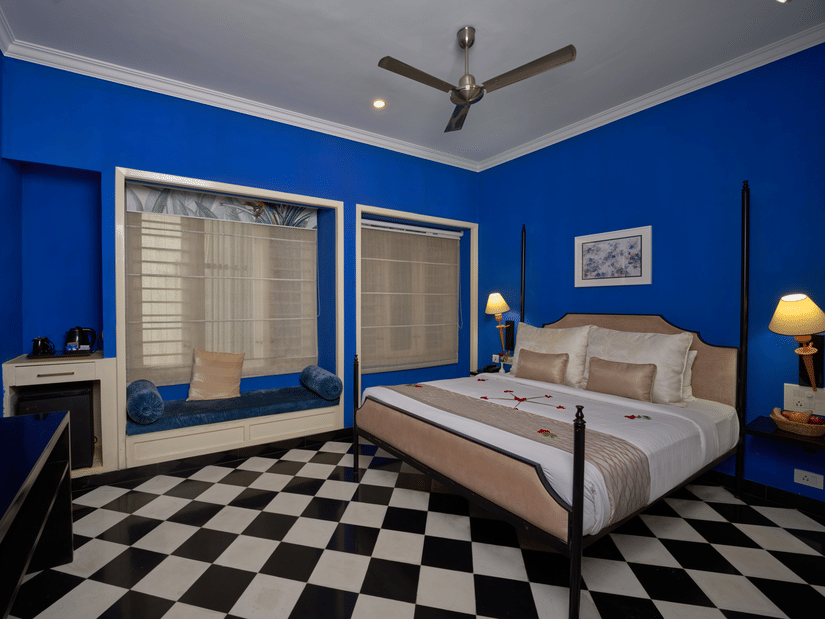
After a day spent moving between waterfronts, heritage streets, galleries, and local flavours, having a comfortable base in the heart of the action makes exploring Kochi feel effortless. The Old Court House by Abad places guests within Fort Kochi, close to the neighbourhood's heritage streets and waterfront attractions.
Our rooms are set within a restored historic building, bringing together period character and contemporary comforts. After exploring the Chinese fishing nets, Mattancherry Palace, or St Francis Church, guests can return to Rendezvous, our multi-cuisine restaurant, for Indian seafood and other dishes. Later, our rooftop swimming pool and sea-view terrace provide a quieter setting to unwind. With many of Fort Kochi's experiences within easy reach, our hotel offers a convenient place to slow down, recharge, and continue discovering the city at your own pace.
Our rooms are set within a restored historic building, bringing together period character and contemporary comforts. After exploring the Chinese fishing nets, Mattancherry Palace, or St Francis Church, guests can return to Rendezvous, our multi-cuisine restaurant, for Indian seafood and other dishes. Later, our rooftop swimming pool and sea-view terrace provide a quieter setting to unwind. With many of Fort Kochi's experiences within easy reach, our hotel offers a convenient place to slow down, recharge, and continue discovering the city at your own pace.